
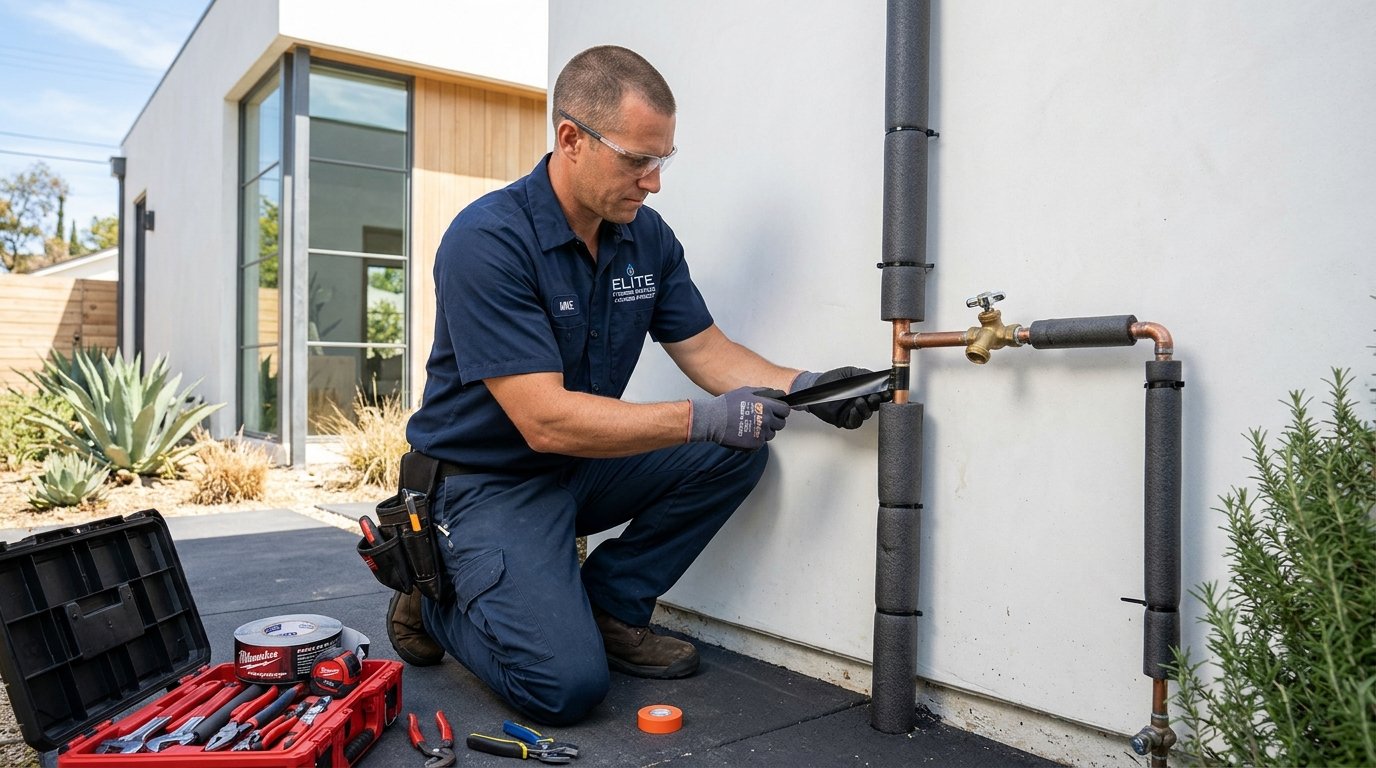
Cold-Snap Alert: Are Your Pipes at Immediate Risk?
If an overnight frost advisory is forecasted for North Orange County, disconnect all garden hoses immediately, insulate outdoor backflow assemblies, and keep indoor faucets on a slow trickle. If you suspect an active freeze or ruptured line, contact our local Anaheim emergency dispatch immediately.
Call Anaheim Dispatch: (714) 790-1968
Key Takeaways: 5 Essential Rules for Anaheim Pipe Protection
- California Homes Lack Deep Frost Lines: Unlike Midwestern homes built with deep basements and heavily insulated subfloors, Anaheim homes frequently route water pipes through uninsulated attics, outside stucco walls, and garage perimeters.
- Pressure Kills, Not Just Expansion: Ice expands by roughly 9% in volume, but the actual pipe rupture is caused by hydrostatic water pressure spike (often exceeding 2,500 PSI) trapped between the ice plug and the closed faucet valve.
- Disconnect Garden Hoses Every Autumn: Leaving a connected garden hose in winter prevents the spigot from draining, causing water to freeze backward into the interior wall pipe.
- Insulate All Above-Ground Supply Lines: Foam polyethylene pipe sleeves and exterior spigot insulated covers cost only a few dollars but save tens of thousands in flood restoration.
- Know Your Main Shut-Off Location: If a pipe freezes or bursts during a freeze cycle, turning off the main water valve in under 60 seconds is the single most effective way to prevent catastrophic interior flooding.
Why Anaheim Homes Are Especially Vulnerable to Cold-Snap Pipe Ruptures
When thinking of frozen or burst pipes, most people picture freezing winters in the Midwest or Northeast. However, plumbing forensic studies show that homes in warm climates like Southern California frequently suffer equal or greater per-incident water damage from sudden freezes.
The explanation lies in regional construction standards. In Anaheim, homes built between 1950 and the late 1990s were designed almost exclusively for heat deflection rather than freeze protection:
- Unconditioned Attics & Crawlspaces: Water supply lines frequently run directly across open ceiling joists or through vented, uninsulated crawlspaces that immediately match outdoor ambient temperatures when nighttime cold air drops down from the Santa Ana mountains.
- Pipes Located on Exterior Stucco Walls: Kitchen sinks, laundry utility sinks, and master bathrooms are routinely situated against exterior-facing walls with minimal fiberglass batting insulation.
- Thin-Walled Type M Copper: Thousands of tract homes throughout Anaheim were plumbed with thin-walled Type M copper tubing. Over decades of exposure to Anaheim's hard, mineral-dense water (often exceeding 18 grains per gallon), these pipes develop interior pitting and metal thinning, making them brittle under pressure spikes.
- Lack of Frost-Free Sillcocks: Standard outdoor hose bibs in Anaheim feature short stems that hold water directly on the cold exterior surface of the home, unlike frost-proof spigots engineered for colder states.
When sudden winter drafts sweep across the Santa Ana Canyon into Anaheim Hills, temperatures can plummet into the low 30s in just a few hours. That is why having the contact information of trusted local plumbers in Anaheim ready before a cold snap arrives can make all the difference between peace of mind and an emergency catastrophe.
The Science of a Burst Pipe: How Freeze Pressure Destroys Plumbing
A common misconception among homeowners is that ice expands radially outward until it cracks the pipe wall at the exact point of the freeze. While ice does expand by roughly 9% as water transitions from liquid to solid, plumbing physics reveals a different culprit.
As ice forms inside an exposed copper or galvanized steel pipe, it creates a solid ice blockage (a "freeze plug"). Because water between the freeze plug and the closed indoor faucet cannot compress, continued ice growth creates an extreme hydrostatic pressure surge. While standard municipal water pressure in Anaheim runs between 50 and 70 PSI, trapped freeze pressure can skyrocket past 2,500 to 3,500 PSI.
Eventually, the pipe wall splits—often several feet away from the ice plug itself, at a weak joint, elbow fitting, or pitted copper seam. When the morning sun warms the exterior walls, the ice plug thaws, and pressurized water gushes out at full volume, pouring thousands of gallons behind drywall, into cabinetry, or through ceilings.
Comparing Pipe Materials & Freeze Resistance
Different piping materials react differently to cold-temperature stresses. Here is how common residential plumbing systems found in Anaheim compare:
Step-by-Step: Winterization Checklist for Anaheim Homeowners
Preventing frozen and burst pipes requires minimal time and very affordable materials. Follow this professional step-by-step checklist every November before the winter chill sets in:
1. Insulate All Exposed Above-Ground Water Lines
Walk the perimeter of your house, garage, crawlspace, and water heater enclosure. Identify any bare copper or galvanized lines exposed to open air. Slide pre-slit, closed-cell polyethylene foam tubes (sized to match your 1/2-inch or 3/4-inch pipe diameters) over the tubing. Secure all seams with heavy-duty exterior acrylic tape or UV-resistant zip ties.
Pay special attention to your main water shutoff valve assembly, the exterior pressure-reducing valve (PRV), and backflow preventers, which are fully exposed to cold night winds. If an old line shows signs of corrosion or pinhole moisture, schedule emergency burst pipe repair and home repiping to eliminate weak points before winter arrives.
2. Disconnect and Drain Outdoor Garden Hoses
Leaving a garden hose connected to an exterior spigot during a cold night is one of the most common causes of indoor wall floods in Orange County. When a hose remains connected, water stays trapped inside the spigot barrel. As that water freezes, it expands backward directly into the supply pipe inside the exterior wall.
Always disconnect, drain, and roll up your garden hoses. Cover outdoor spigots with insulated dome covers (foam faucet jackets), which trap residual heat radiating through your home's foundation. If your outdoor spigots have constant drips or loose packing nuts, address them with outdoor faucet, bibb, and sink plumbing solutions before cold snaps hit.
3. Open Under-Sink Cabinet Doors
During anticipated freezing nights, open the cabinet doors beneath kitchen and bathroom sinks—especially those positioned against exterior walls. This allows warm air from your home's heating system to circulate around the uninsulated P-traps and supply risers, keeping them well above the freezing threshold.
4. Let Vulnerable Faucets Trickle a Slow Stream
When local weather forecasts predict overnight low temperatures near 32°F, open the faucet farthest from your main water meter to a pencil-lead-thin continuous trickle. A tiny stream of running water keeps water in constant motion through the lines and relieves the catastrophic pressure spikes that cause ruptures if a freeze plug forms elsewhere in the pipe.
5. Keep Your Indoor Thermostat Set Consistently
Never shut off your central heating system completely during cold winter nights, even if you are leaving town for the weekend or the holidays. Set your thermostat to no lower than 58°F (14°C). The modest cost of running your furnace or heat pump is microscopic compared to the thousands of dollars required for emergency water extraction and drywall replacement.
6. Service and Flush Your Water Heater
During cold weather, your water heater works substantially harder because incoming municipal water from Anaheim Public Utilities is colder. Thick mineral sediment at the bottom of the tank insulates the burner, causing hot spots, thermal stress, and tank fracture. Schedule seasonal water heater maintenance and repairs to flush calcified sediment, inspect the temperature-and-pressure (T&P) relief valve, and ensure your hot water supply remains reliable all season.
7. Clear Sluggish Drains to Prevent Stagnant Traps
Water trapped inside slow or partially clogged drains and P-traps can freeze and crack plastic drain pipes beneath your floors. Ensure your sewer lines and fixture traps drain smoothly with professional drain cleaning and maintenance before winter arrives.
Warning Signs Your Pipes Have Already Frozen
If you wake up on a crisp Anaheim morning and encounter any of the following symptoms, an uninsulated line may already be frozen:
- Zero Flow or a Weak Trickle: Turning on a kitchen or bathroom faucet produces only a sputtering hiss or a tiny drip despite normal municipal water supply.
- Visible Frost on Exposed Metal: Inspect outdoor spigots, attic copper lines, and garage pipes. A visible layer of white frost or condensation on the metal indicates ice inside.
- Unusual Bulging or Misshapen Copper: Copper tubing that appears swollen or oval-shaped has undergone internal pressure expansion and is on the verge of splitting.
- Foul Odors from Drains: If an ice blockage prevents sewer gases from venting through roof stacks, gasses may back up through floor drains or fixtures.
- Rattling or Clanging Noises: Strange banging noises (water hammer) inside walls when valves are opened indicate trapped pressure waves bouncing against an ice obstruction.
Safe Thawing Techniques vs. Dangerous Mistakes
If you discover a frozen pipe before it has burst, taking the right action immediately can save your home from a massive flood. Follow these safety rules:
⚠️ What NOT to Do When Thawing Frozen Pipes:
- Never use an open flame blowtorch, propane torch, or kerosene heater: Open flames ignite dry wall studs, insulation batting, and building framing within seconds. They also generate sudden thermal shock that shatters frozen pipes instantly.
- Never pour boiling water directly onto frozen copper: Violent temperature differential causes extreme metal expansion, accelerating joint fractures.
- Never leave space heaters unattended in attics or crawlspaces: Unattended electric heaters are a leading cause of residential winter structure fires in California.
The Safe Thawing Protocol:
- Shut Off the Main Water Supply: Before applying any heat, close your main shut-off valve. If the pipe is already cracked, heating the ice will release pressurized water the instant it melts. Having the main supply off ensures you stay in complete control.
- Open the Faucet Associated with the Line: Keep the faucet handles open so melting water and steam can escape.
- Apply Gentle, Controlled Heat: Use an ordinary handheld hairdryer on medium heat, moving it continuously back and forth along the pipe. Start from the faucet end and work gradually toward the blockage. Alternatively, wrap the frozen section in towels soaked in warm (not boiling) water.
- Inspect Closely as Flow Restores: Once water begins flowing smoothly, inspect every inch of the pipe with a flashlight for pinhole leaks, hairline fissures, or weeping solder joints. If you spot any leakage, call a licensed plumber right away.
What to Do If a Pipe Bursts: 4-Step Emergency Protocol
If a frozen pipe ruptures and water begins spraying inside your home, every second counts. Stay calm and follow this sequence:
- Turn Off the Main Water Valve Instantly: Run to your front exterior spigot shutoff or the street meter box and turn the valve completely off. Keep a curb key handy if your shutoff is in a ground vault.
- Turn Off Electricity to Wet Zones: If water has saturated floors near outlets, appliances, or baseboard heaters, trip the master circuit breaker in your electrical panel. Never touch standing water if you suspect live voltage.
- Drain Residual Line Pressure: Open all outdoor hose bibs and ground-floor faucets to purge remaining water out of the plumbing system into your yard rather than your living room.
- Call 24/7 Anaheim Emergency Dispatch: Immediately call a dedicated 24/7 Anaheim emergency plumbing service. Our dispatched technicians arrive with commercial pipe extraction equipment, specialized PEX-a crimpers, and professional moisture meters to make rapid, code-compliant repairs and contain structural damage.
Hidden Slab Leaks Caused by Ground Movement & Freeze Shifting
In Anaheim neighborhoods like West Anaheim and Anaheim Hills, expansive clay soil swells during winter rains and contracts during dry winds. This constant sub-slab movement places immense mechanical shear on under-slab hot water lines. If cold water shocks already-stressed copper joints below the foundation, slab leaks can develop silently.
If you notice warm floorboards, hearing phantom running water when all faucets are closed, or noticing spikes on your Anaheim Public Utilities water bill, request non-invasive leak detection services. Utilizing acoustic ground sensors, thermal cameras, and helium tracer tests, technicians isolate the leak without demolishing your flooring.
Anaheim Neighborhood Vulnerability Map
Because of Anaheim's diverse microclimates and architectural eras, different neighborhoods experience distinct cold-weather plumbing threats:
Anaheim Hills (92807, 92808)
Elevated terrain and cold mountain drafts regularly produce freezing overnight temperatures. Large outdoor irrigation manifolds and hillside supply lines require heavy foam wrap.
Historic Colony District (92805)
Older craftsman and Victorian homes often have original galvanized supply lines with internal rust narrowing and drafty crawlspaces that freeze quickly.
West Anaheim (92801, 92804)
Mid-century ranch homes with thin-wall copper running through unconditioned attics and exterior garage utility hookups that lack thermal barrier insulation.
Platinum Triangle & Resort (92802)
High-density residential complexes, commercial backflow preventers, and rooftop water heating assemblies exposed to wind chill and sudden pressure drops.
Frequently Asked Questions (FAQ)
Q: Do water pipes really freeze in Anaheim and Orange County?
Yes. While Southern California enjoys mild weather most of the year, winter overnight temperatures in Anaheim—especially in elevated pockets like Anaheim Hills and East Anaheim along Santa Ana Canyon—frequently drop into the low-to-mid 30s. Because local architectural construction places water lines in unheated crawlspaces, exterior stucco walls, and outdoor hose bibs without heavy insulation, sudden overnight cold snaps easily cause exposed copper lines to freeze and rupture.
Q: At what temperature do residential pipes begin freezing?
Water technically freezes at 32°F (0°C), but outdoor uninsulated plumbing lines or pipes running through drafty attics can freeze when ambient outdoor air drops below 35°F to 38°F with wind chill. Pipes that have standing, pressurized water and are directly exposed to night air are most vulnerable.
Q: Should I let my faucets drip overnight during an Anaheim cold snap?
Yes. Letting a faucet served by exposed or exterior piping drip at a slow, pencil-lead-thick stream relieves internal hydrostatic pressure. It is not the ice itself that bursts the pipe, but the trapped hydraulic pressure built up between the freeze plug and the closed faucet.
Q: What should I do if my water pipe has already frozen?
First, shut off your main water valve immediately to avoid an uncontrolled indoor flood when the ice thaws. Open nearby faucets to allow melted water and expanding steam to escape. You may gently warm the pipe using a handheld hairdryer or warm towels. Never use open-flame blowtorches, propane heaters, or heat guns, which present severe fire hazards and can shatter frozen pipes.
Q: Does homeowners insurance in California cover burst pipe water damage?
Most standard California homeowner insurance policies cover sudden and accidental water damage caused by burst pipes. However, insurers may deny coverage if they determine the damage resulted from gross neglect or failure to maintain adequate heating. Documenting your plumbing repairs with licensed invoices from an Anaheim C-36 contractor strengthens your claim.
Need Professional Winterization or Pipe Repairs in Anaheim?
Protect your property before freezing temperatures strike. Whether you need pipe insulation, pressure regulator testing, or urgent 24/7 leak repairs, our Anaheim plumbers are ready around the clock.